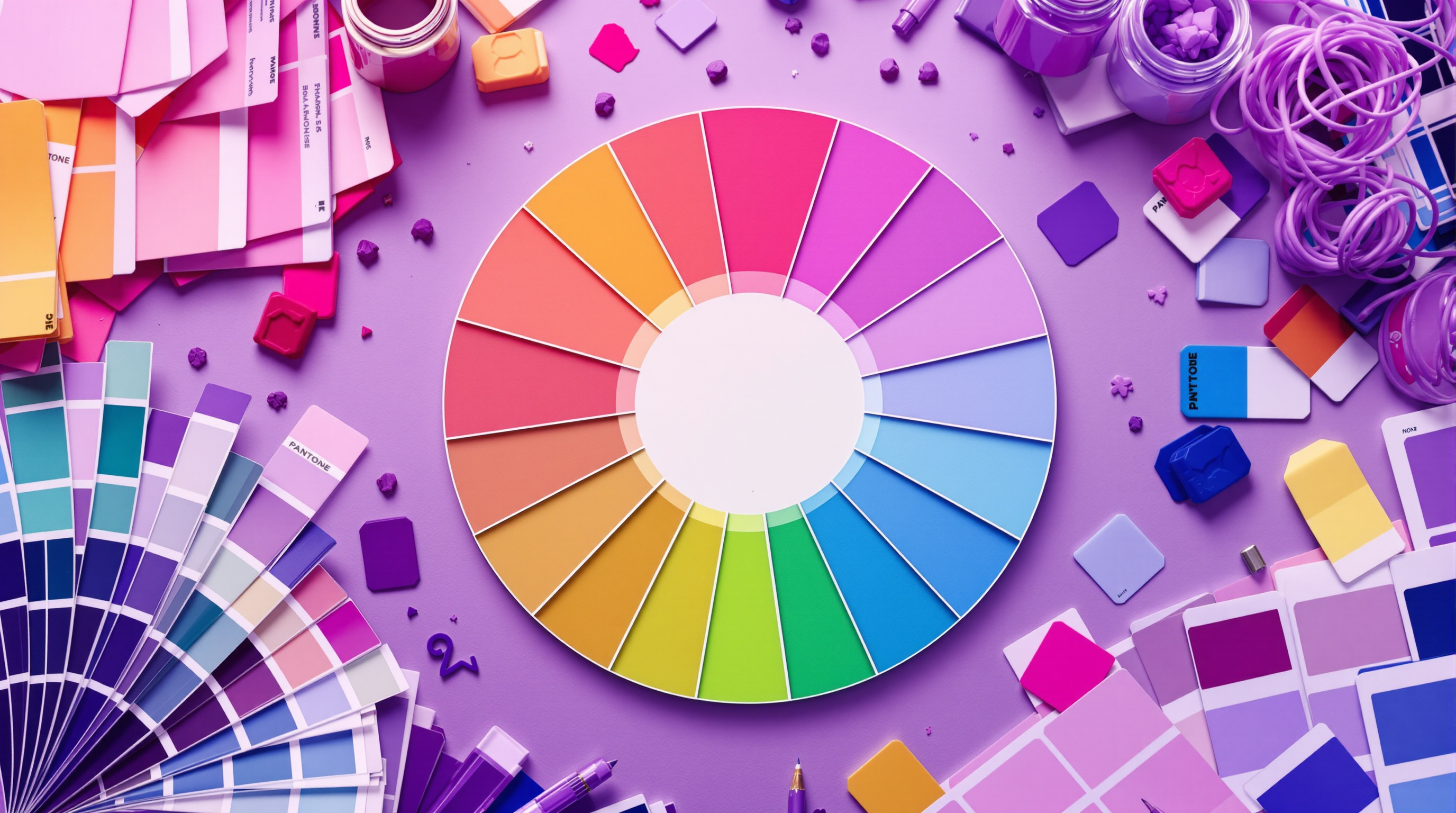
Color is one of the most powerful tools in a designer's arsenal. It communicates instantly, evokes emotions, and influences behavior before viewers consciously process what they are seeing. Understanding color theory transforms intuitive color choices into strategic decisions that enhance design effectiveness.
The Color Wheel
The color wheel, developed by Sir Isaac Newton in 1666, organizes colors by their relationships. Understanding these relationships helps create harmonious palettes and predict how colors will interact.
Primary Colors
In traditional color theory, red, yellow, and blue are primary colors that cannot be created by mixing other colors. In digital design, RGB (red, green, blue) serves as the primary system, while print uses CMYK (cyan, magenta, yellow, black).
Secondary and Tertiary Colors
Secondary colors result from mixing two primaries: orange, green, and purple. Tertiary colors mix primary and secondary colors, creating nuanced hues like red-orange or blue-green. These intermediate colors expand the palette and enable subtle variations.
Color Relationships
Color harmonies describe pleasing combinations based on color wheel positions. The Pantone Color Institute and color theory researchers have identified several reliable patterns:
Common Color Harmonies
- Complementary: Colors opposite on the wheel (high contrast)
- Analogous: Colors adjacent on the wheel (harmonious)
- Triadic: Three colors equally spaced (vibrant, balanced)
- Split-Complementary: Base color plus two adjacent to its complement
- Tetradic: Four colors in rectangular arrangement
- Monochromatic: Variations of a single hue
Color Psychology
Colors carry psychological associations that influence perception and behavior. While some associations are culturally specific, others appear across cultures. Understanding these associations helps select colors that reinforce intended messages.
Warm Colors
Red, orange, and yellow evoke warmth, energy, and excitement. Red suggests passion, urgency, or danger. Orange conveys friendliness and enthusiasm. Yellow represents optimism and attention. These colors advance visually, appearing closer to the viewer.
Cool Colors
Blue, green, and purple create calming, professional impressions. Blue suggests trust, stability, and professionalism, explaining its popularity in corporate branding. Green evokes nature, growth, and health. Purple implies creativity, luxury, and wisdom. Cool colors recede visually.
Neutral Colors
Black, white, gray, and brown provide balance and sophistication. Black conveys elegance, power, and formality. White suggests purity, simplicity, and space. Gray offers neutrality and balance. Brown grounds designs with earthiness and reliability.
Color in Practice
Contrast and Readability
Sufficient contrast between text and background is essential for readability. The Web Content Accessibility Guidelines specify minimum contrast ratios: 4.5:1 for normal text, 3:1 for large text. Tools like WebAIM's Contrast Checker help verify compliance.
Color Consistency
Consistent color application across designs builds brand recognition. Establish primary, secondary, and accent colors, defining specific values rather than general descriptions. Document colors in brand guidelines with hex codes, RGB values, and Pantone matches.
Cultural Considerations
Color meanings vary by culture. White signifies purity in Western cultures but mourning in some Eastern cultures. Red represents luck in China but danger in many Western contexts. Research cultural associations when designing for international audiences.
Building Color Palettes
Creating effective color palettes involves both science and intuition. Start with purpose: what mood or message should the palette convey? Then apply color theory principles while trusting your eye for final adjustments.
The 60-30-10 Rule
A classic guideline suggests using a dominant color for 60% of the design, a secondary color for 30%, and an accent color for 10%. This creates visual balance while allowing focal points.
Starting Points
Inspiration can come from anywhere: nature, art, photography, or existing brand elements. Color palette generators like Adobe Color or Coolors can suggest harmonious combinations based on input colors or images.
"Color is a power which directly influences the soul." Understanding color theory transforms this power from accident to intention, enabling designs that communicate precisely and effectively.
Color for Digital vs. Print
Digital and print mediums handle color differently. Screens display RGB color (additive color mixing), while print uses CMYK (subtractive color mixing). Colors that appear vibrant on screen may look dull in print, and vice versa.
When designing for both mediums, establish color values in both systems. Some vibrant digital colors cannot be reproduced in CMYK; find acceptable print alternatives early rather than discovering problems at production.
Color Accessibility Testing
Designers must account for the fact that approximately eight percent of males and half a percent of females experience some form of color vision deficiency. Relying solely on color to convey meaning, such as red for errors and green for success, excludes these users. Pairing color with icons, labels, or patterns ensures information remains accessible to everyone.
Browser extensions and built-in operating system tools now simulate various types of color blindness in real time, allowing designers to evaluate their palettes during the design phase rather than retroactively. Incorporating accessibility testing into your standard workflow prevents costly revisions and broadens the effective reach of every project you deliver.
Expand Your Design Knowledge
- Typography Fundamentals - Pair color with type
- Graphic Design Essentials - Apply color in context
- Web Design - Color for digital interfaces